It is so rare to find a book that will make me cry. This is perhaps the most beautiful thing that I have read in recent times. It is a truly moving book - I know some of the people in the book and, as such, I thought that I would find it interesting; however, I did not know what I was in for.
There is a story (as always) behind my reading of this book. I was reading the local paper a week or so ago and I saw a picture of a young girl in my class holding a book up with her Dad. This particular South Sudanese girl has the most beautiful smile, however, can be very quiet and reclusive. Brazenly I said in class, in front of everyone, 'Did I see you in the paper holding a book that you had written?" She was embarrassed and found me confrontational and the situation awkward. I don't usually care about those things and powered on with my questioning anyway. She eventually agreed that there was a book about the Sudanese community but it could have been her sister in the paper. I said that I was interested in reading the book; I like to support the kids in your class.
Well, there are two other Sudanese students in the class, a quiet boy who was listening to the interaction but was silent the whole time. The next class that we had - he approached me and passed on a copy of the latest book that the local South Sudanese community has produced. I read it that night. I simply couldn't put it down.
The book is an insight into South Sudanese culture and personal stories of refugees who have come into my local community. It is more than that though. It is the sharing of the stories and culture to their children. It is an attempt to communicate with kids that want to be Australian and fit into Australian society. It's a personal invitation to sit at their family dinner table and listen to these people communicate with their kids. It is intensely personal - yet never voyeuristic. You feel so special to read these personal accounts - so heartbroken at the trials faced by these people, and for me so jealous that they have such a strong culture. Ours is broken and we seem hellbent on breaking it further - theirs is so strong.
In the introduction Abraham Malual shares how they want to assimilate into this country, however, not reject their own culture and stories. This is the sort of bicultural substructure that Noel Pearson advocates, but seems so unwilling to be embraced among Indigenous peoples. I, for one am glad that these people bring strong families into Australia - it is my hope that they will help us reclaim what we have lost.
The book is a set of stories about life in South Sudan or the difficulties of life in Australia. Initiation, facial scars, menstruation, marriage dowry's, death of loved ones and problems with English teaching in Australia, it is all here. Every story has a brief response from one of their children. Some of them are priceless. You'll laugh, cry, wince, laugh again and, if you are like me, feel jealous that such wonderful stories can be shared in families.
Storytelling simply doesn't get better than this - it will make these lovely people even more endearing to you. Absolute must read. I'm going to get them all.
5 -stars
Sunday, 7 June 2015
Saturday, 16 May 2015
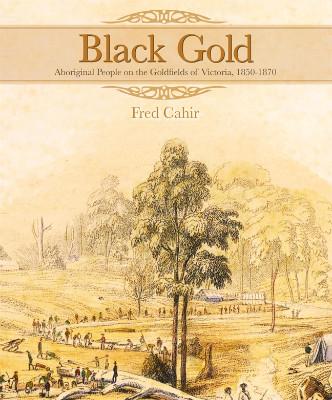
Black Gold - Fred Cahir
It is an interesting story how I came to read this book. It all started with the Clare Wright Eureka book that I reviewed here.
I was fascinated by an incidental phrase in Wrights book and so I contacted her to clarify. Here is our email exchange:
Hi Ms Wright,
I am writing because I have recently finished reading your book "The forgotten rebels of Eureka"; I am a history teacher teaching Year Nine history in country Victoria.
I read your book primarily because I didn't know a lot about mining history in Australia, and I had to teach the Eureka Stockade as part of the national curriculum, and I wanted to bone-up on recent scholarship. I'd not taught history in a number of years...I have found your book a fascinating read, is exquisitely well written and indeed a rollicking tale. Your book has piqued my interest and, as such, I have a question in which I hope that you can point me in the right direction.
On Page 136, you state this:
"The only miners and traders on the goldfields you do appear to have been genuinely exempt from license holding were the Wathaurung."
You have a section a little further on in the chapter that states how both aboriginal men & women were gold-mining. Also, in the chapter 'winners and losers' you expand upon the perceptions in which the aboriginal people were held.
My questions are simple ones; why were the local aboriginal clans with exempt from license holding? Has comparable research to yours, been done in regards to aboriginal involvement in the Stockade? If so, can you recommend some reading.
Thanking you,
Matt Harris
Hi Matt,
Thanks for your email and your generous feedback. I'm glad you enjoyed my book.
Re your interesting query: my sense is that because indigenous people were not counted as people (e.g.: not included in the census or regarded in any way as citizens) they were de facto exempt from licensing holding. They did not technically exist. Although there are accounts of Wathaurung people engaged in mining, I have not come across evidence of them taking out a licence or being fined for not holding one.
The expert in this field is Dr Fred Cahir who teaches at Federation University in Ballarat. His book Black Gold: Aboriginal People on the Goldfields of Victoria, 1850-1870 is worth a look.
As you are a teacher, I should also let you know that I have a Young Adult version of my book coming out in August. It is aimed at a secondary school audience, mindful of the national curriculum.
Thanks again for your enthusiasm.
Clare
So that is how I came to read Fred Cahir's "Black Gold". It is available free to read as an electronic download here.
This book is fascinating too - the background in mining that the Indigenous Australians have is fascinating. Chair states that "...much evidence shows Aboriginal people quarrying for crystal,
greenstone, sandstone, obsidian, kaolin, ochres and basalt across Victoria." But what about that heavy yellow metal that gripped the interest of so many people, from so many places? Did Aboriginal people seek that? Cahir interestingly states that "[t]here are instances of gold nuggets being found associated
with old Aboriginal sites, well away from auriferous reefs. The Watchem Nugget
from near Maryborough (1904) and the Bunyip nugget from near Bridgewater,
east of Bendigo, may both have been carried to their recorded place of discovery
by Djadjawurrung people."
Cahir has an interesting section on Indigenous and Chinese relations, this section was particularly interesting:
"The reverend Arthur Polehampton, who spent much time in the Western district
of Victoria in the 1850s, considered that ‘The blacks are said to have a strong
prejudice against the Chinese, whom they accuse of being neither black nor
white’, and a Ballarat Star correspondent reported in 1862 on an ‘exchange of
insults’ between an Aboriginal and a Chinese man in Avoca. Similarly, Peter, a
Djabwurrung man, was imprisoned for a week in December 1866 at Ararat for
‘assaulting a Chinaman whilst drunk’."
There is a wonderful section under the chapter heading of Co-habitation, in which Cahir exemplifies Indigenous cultures focus on kinship and the resuscitated kin relationship. This is a syncretic belief from Indigenous pre-colonial times and Christianity. This explains some of the willingness to help with gold location, even without rewards. Cahir then goes on to explain the extent of the environmental damage that alluvial mining left in its aftermath and how this indigenous peoples dislocated. I must confess that there is some very fair and balanced writing about Government and the Missions. Chair is so evenhanded here and, particularly shares some interesting insights into the missions and the role of Aboriginal Christians. Much to the churches chagrin some did not view the Aboriginals worthy of delivering the message too.
"... there was a degree of discord in Christian
circles about the fate of Aboriginal people. Some pronounced that ‘Australian
aborigines were mere beasts in human shape ... and that no efforts made to
evangelise the aborigines of Victoria could be successful’."
Others viewed it very differently:
"Other prominent Christians considered that ‘the condition of the aborigines is that of dying
men’ and as all men are created in God’s own image, they could be ‘saved [from
extinction and damnation] only by divine interference’."
Some Aboriginal Christians held radical beliefs about the importance and the truth of Christianity:
"Missionaries, including Daniel, an Aboriginal man from the Lake Hindmarsh
region, firmly believed they were acting in the best interests of Aboriginal
people, and that to be ‘raised’ in Christianity was compensation for their losses
as a result of British colonisation."
Really fascinating book, in quite an unexpected way. I think that it is an important read. Cahir states that one of the reasons for writing the book was to encourage others to look at the shared history that white and black Australians have in regards to mining and forge a common history in view of reconciliation. My specific question to Clare Wright was never answered - however, it has been an interesting tangent to stroll down.
4 Stars
Really fascinating book, in quite an unexpected way. I think that it is an important read. Cahir states that one of the reasons for writing the book was to encourage others to look at the shared history that white and black Australians have in regards to mining and forge a common history in view of reconciliation. My specific question to Clare Wright was never answered - however, it has been an interesting tangent to stroll down.
4 Stars
Wednesday, 13 May 2015
Rosencrantz and Guildenstern are Dead - Stoppard
I've been a little bit busy of late and have not had time to write on the blog - however, I have tried to keep up with my reading. This too, is hard when the work gets a little on top of you. I've been away on two back-to-back camps and it was tiring. However, I have been reading little by little none-the-less.
A box of books that my school library were getting rid of appeared mysteriously in the staffroom a few weeks ago. Take what you want was the requirement and rummaging through the box I stumbled upon a copy of Stoppard's brilliant play.
I remember seeing the 1990 movie with Gary Oldman and Tim Roth in the early 1990's - the Blackburn Video shop had a VHS copy. I think that I was the only one who ever hired it. In those days I was a young Music student at an Arts University in Melbourne. I'd just discovered Beckett and I had been introduced to Phillip Glass and Salvador Dali. I had a big Dali on the wall of my room and booked tickets in 1993 to see 'Einstein on the beach' when the first world tour arrived in Melbourne. I listened for many hours to John Cage's beautiful Prepared Piano Sonata's as I discovered Minimalism, Surrealism and other forms of post-modernity in the arts. So Stoppard's play appealed to me.
Re-reading this play, some twenty-two years later was interesting. I was able to put things in better perspective, now that I have read Francis Schaeffer and particularly Hans Rookamakker. My study into the worldview concept that began in 2005 - ten years ago - reading James Sire's 'Naming the Elephant' has put me in better stead to understand the place of this form of Art and view it, understand it from my perspective rather than a worldview forced upon me - as it was when I was younger.
The magnificent writing and fantastic humour of Stoppard's play strike you clearly at the beginning of the work. It is a marvellous dialogue between out two protagonists (maybe victims, maybe solipsists) as they discuss probability, socialism, existence and knowledge. It is a scream to read and too many lines that could be quoted.
I stopped in Act 2 to read (selectively) Hamlet again. Having the luxury to do that - which you don't in a theatre or watching the movie - made the read better and creates a burgeoning respect for Stoppard's play.
Lots of themes in this play are mentioned, issues of ontology, epistemology, logic and insignificance and many of these themes I mention in reading other works. In this one - I just think that it is funny and clever.
5 Stars - Brilliant.
A box of books that my school library were getting rid of appeared mysteriously in the staffroom a few weeks ago. Take what you want was the requirement and rummaging through the box I stumbled upon a copy of Stoppard's brilliant play.
I remember seeing the 1990 movie with Gary Oldman and Tim Roth in the early 1990's - the Blackburn Video shop had a VHS copy. I think that I was the only one who ever hired it. In those days I was a young Music student at an Arts University in Melbourne. I'd just discovered Beckett and I had been introduced to Phillip Glass and Salvador Dali. I had a big Dali on the wall of my room and booked tickets in 1993 to see 'Einstein on the beach' when the first world tour arrived in Melbourne. I listened for many hours to John Cage's beautiful Prepared Piano Sonata's as I discovered Minimalism, Surrealism and other forms of post-modernity in the arts. So Stoppard's play appealed to me.
Re-reading this play, some twenty-two years later was interesting. I was able to put things in better perspective, now that I have read Francis Schaeffer and particularly Hans Rookamakker. My study into the worldview concept that began in 2005 - ten years ago - reading James Sire's 'Naming the Elephant' has put me in better stead to understand the place of this form of Art and view it, understand it from my perspective rather than a worldview forced upon me - as it was when I was younger.
The magnificent writing and fantastic humour of Stoppard's play strike you clearly at the beginning of the work. It is a marvellous dialogue between out two protagonists (maybe victims, maybe solipsists) as they discuss probability, socialism, existence and knowledge. It is a scream to read and too many lines that could be quoted.
I stopped in Act 2 to read (selectively) Hamlet again. Having the luxury to do that - which you don't in a theatre or watching the movie - made the read better and creates a burgeoning respect for Stoppard's play.
Lots of themes in this play are mentioned, issues of ontology, epistemology, logic and insignificance and many of these themes I mention in reading other works. In this one - I just think that it is funny and clever.
5 Stars - Brilliant.
Monday, 30 March 2015
The Forgotten Rebels of Eureka - Clare Wright
Of all the
events of Australian history I know least about - Eureka is the top of that
list. Perhaps that is bad, perhaps I am negligent, and perhaps that is
reflected in my personal dislike of Unionism. I don't know. It does
seems somewhat unpatriotic though, it does seem too churlish to not know
anything (or at least remembered anything from school) about Eureka, the
stockade, the killing of the miner Scobie and the burning of the Hotel owned by
the Bentley's. I feel even more ashamed as Wright articulates that this is
“…what all school children know.” I don't. Things get worse as I
have to teach a unit of Eureka in my Yr. 9 History class in but a few weeks
time. Arggghh.
Wright
quotes Blainey:
"Eureka
is like a great neon sign with messages that flick on and off with different
messages for different people on different occasions." (p xii)
Wright is
seeking to use Eureka to "...illuminate issues of gender bias in our
collective bedtime stories." This
sort of lefty proposal doesn’t sit well with me. I was even more concerned when I read the
endorsement in the inside cover from the Marxist left review:
“It is exhilarating to encounter a historian who thinks that writing women into history in not about emphasising family life, or portraying women as victims of men, separate from the big struggles for democracy and justice.”
Whoa, what
about that then! As I embarked, I
wondered if the Marxist left and I were reading the same book. Other reviews were closer to fact – the Courier
Mail was one:
“Beautifully written, her book takes readers on a vivid journey of what life was like for the families of the miners, merchants, prostitutes and police … It’s a great story.”
Wright's book is a gambolling ride through the 1850's in Victoria. Wright is an outstanding story-teller and a truly wonderful writer. Let me share two wonderful sentences, lightly peppered with alliteration and imagery.
"But it was not just ideology that wove women into the fabric of the goldfields society. In the hard-nosed way of British bureaucracy, there were structural provisions made for the reality that woman would be integral to the colonial economy." pg. 135.
Wright
shares that one major difference in the Californian Gold rush and the
Victoria one was the abundance of Women on the Goldfields. This was an
ideological ploy, as it was believed that women were a civilising element and
that the Australian Goldfields would not degenerate into the lawless
frontier that was in the America's. However, let's look at the
writing.
I've marked
the alliteration in the text; wove women, British bureaucracy, women would and
the pièce de résistance, colonial economy.
Economy, having an iambic
foot, sounds like alliteration (actually assonance) because of the unstressed ‘e’ and the stressed ‘c’. Wright’s writing is sometimes so poetic. She really is a wonderful writer and I think
that I’ll be reading more of her as a result.
Then, of course, there is the fact that the imagery of weaving – working
with fabric – is the metaphor used in the first sentence. Finally, there is the
lovely way that this sentence is beefed up, injected with testosterone, by
beginning with a preposition. It is just marvellous.
The stories are truly wonderful, the tales of immigration and the stories of Sarah Hanmer and Clara Du Val are fascinating, even more so as they develop throughout the book. The stories of travel sickness and death in unsanitary conditions of the ships, along with the celebrations of crossing the equator line were riveting. The walk to Ballarat, particularly the asides, like how Wright mentions 'The Gap' at Bacchus Marsh. A place where the dray's got stuck crossing the ravine and had to be pulled out. They waited for days for this to happen and a good deal of money was made by those who did the pulling out. This is contrasted with the "nifty rollercoaster stretch" of the Western Highway that we travel today. It made me scurry along to Google Map to try to locate it. Of course, the Stockade itself too.
The Scholarship is outstanding and the conclusions drawn do not seem forced. Janet Kincaid's rather nasty letter to her husband is an interesting find. Sarah Hanmer and Clara Du Val's lies about themselves demonstrate the desire to make new identities for a New World. Culminating in the most provocative thesis of the book. At the end of the chapter 'Parting with my sex' Wright illustrates how Ballarat in 1854 was a functioning township, not a miner's slum or frontier outpost. She states that Gov. Hotham believed in the inveterate ability of women to humanise and bring order to society. However, Wright ends, Ballarat '...was heading for a train wreck. And the women weren't hauling on the brake. They were stoking the coals.'
Wright's book is a page-turner, comparable to the best fiction writers, yet with the scholarship of a responsible historian. A truly great read and a chance to learn a lot. I never felt that I was being assaulted by the left - or an ideology shoved down my throat. I found myself engulfed in a by-gone era and challenged to think differently. Truly great writing.
5 Stars
Friday, 13 March 2015
The Alternberg 16 - Suzan Mazur
Independent Journalist Suzan Mazur has written a cracking book about the current state of Evolutionary Theory. When I say 'cracking' I mean that It was easy to read and that I learnt a lot from it. There are many drawbacks in her writing style too, so let's not misinterpret 'cracking' for well-written.
Richard Dawkins tells us that Evolution is fact. However, this book shows that his statement needs to be carefully nuanced. Here is a veritable list of incredibly clever men and women working in the field of evolutionary biology who dissent from the neo-darwinist claims. All of them believe in evolution, as in biological change over time, however, the centrepiece of the neo-darwinist modern synthesis is that 'natural selection from random genetic mutations' is the main driver of the evolutionary process. In 2008, a bunch of academics got together in Altenburg, Vienna to discuss an Extended synthesis that drives biological change.
This book is a series of blog-like posts that Mazur has put together. It can make for very frustrating reading. There is no plot, or unveiling of a narrative. It is a series of interviews, some from those who attended the Altenburg meeting and others who demur with the Modern synthesis. Dawkins is interviewed too, his hubris is truly ever-present.
I the found the Lima-de-Faria (a cytogeneticist) interview absolutely fascinating. Quotations like the following are eminently interesting:
Wow, the fallowness of Dawkins's brazen oversimplifications are manifest in the concerns of many, particularly in the question "What drives evolutionary change?" I came out of this book further affirmed that we just do not know.
The book is subtitled "An exposé of the Evolution industry." Nowhere in the book is that more explicit than the interview with Roger Buick (great name), an Australian (trust us to say it as it is), who is head of Earth Sciences and Astrobiology at the University of Washington.
Science, like anything, is subject to the whims of man. Where there is money, the research will follow. Dr Chris McKay sums up the real problem with neo-darwinism.
Dr Chris McKay is a NASA astrobiologist. In the only personal touch in the book that didn't make me roll my eyes, but made me laugh, Mazur says,
The evolution industry is beset by political pressure, money and High priest-like dogmatism and is muddier than what it's apologists would lead you to believe. Mazur's book shows some of this and it is no wonder that the PZ Meyers of this world vehemently decry it's worth. It is not really well written and can be a difficult book to grapple with because of it' structure. However, Mazur is an intelligent journalist and she knows her stuff, asks the right questions and draws coherent conclusions.
Some interesting content, too much repetition, too much with the familial statements - could have been better presented. Also, while the book contains full transcripts of interviews, the salient details could have been extracted for a book 2/3's it's size. Good to ensure context - lots of laborious reading.
3 out of 5 stars.
Richard Dawkins tells us that Evolution is fact. However, this book shows that his statement needs to be carefully nuanced. Here is a veritable list of incredibly clever men and women working in the field of evolutionary biology who dissent from the neo-darwinist claims. All of them believe in evolution, as in biological change over time, however, the centrepiece of the neo-darwinist modern synthesis is that 'natural selection from random genetic mutations' is the main driver of the evolutionary process. In 2008, a bunch of academics got together in Altenburg, Vienna to discuss an Extended synthesis that drives biological change.
This book is a series of blog-like posts that Mazur has put together. It can make for very frustrating reading. There is no plot, or unveiling of a narrative. It is a series of interviews, some from those who attended the Altenburg meeting and others who demur with the Modern synthesis. Dawkins is interviewed too, his hubris is truly ever-present.
I the found the Lima-de-Faria (a cytogeneticist) interview absolutely fascinating. Quotations like the following are eminently interesting:
"Selection is a political not a scientific concept. At the time of Darwin it fitted perfectly the expanding colonialism of Victorian England. At present, Darwinism has been equated with evolution in an effort to convert it into the ideological arm of globalization (sic)...everybody knows that selection occurs in nature, but the chromosome and the cell circumvent its effect by many molecular mechanisms." (pg.86)
Wow, the fallowness of Dawkins's brazen oversimplifications are manifest in the concerns of many, particularly in the question "What drives evolutionary change?" I came out of this book further affirmed that we just do not know.
The book is subtitled "An exposé of the Evolution industry." Nowhere in the book is that more explicit than the interview with Roger Buick (great name), an Australian (trust us to say it as it is), who is head of Earth Sciences and Astrobiology at the University of Washington.
"I don't think academics are co-opted into anything. But they do tend to follow the money. There's no coercion in it. Academics are greedy for cash like anybody else." (pg.160)
Science, like anything, is subject to the whims of man. Where there is money, the research will follow. Dr Chris McKay sums up the real problem with neo-darwinism.
"The Darwinian paradigm breaks down in two obvious ways. First, and most clear, Darwinian selection cannot be responsible for the origin of life. Secondly, there is some thought that Darwinian selection cannot fully explain the rise of complexity at the molecular level." (Pg. 213)
Dr Chris McKay is a NASA astrobiologist. In the only personal touch in the book that didn't make me roll my eyes, but made me laugh, Mazur says,
'Over the phone I detect a touch of William Shatner's Kirk in the voice of NASA astrobiologist Christopher P. McKay." (pg.200)
The evolution industry is beset by political pressure, money and High priest-like dogmatism and is muddier than what it's apologists would lead you to believe. Mazur's book shows some of this and it is no wonder that the PZ Meyers of this world vehemently decry it's worth. It is not really well written and can be a difficult book to grapple with because of it' structure. However, Mazur is an intelligent journalist and she knows her stuff, asks the right questions and draws coherent conclusions.
Some interesting content, too much repetition, too much with the familial statements - could have been better presented. Also, while the book contains full transcripts of interviews, the salient details could have been extracted for a book 2/3's it's size. Good to ensure context - lots of laborious reading.
3 out of 5 stars.
Saturday, 28 February 2015
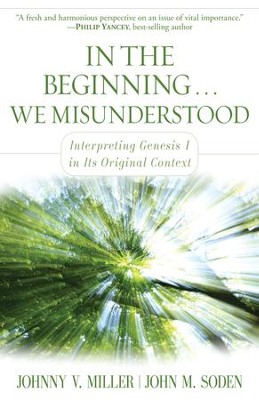
In the beginning...we misunderstood - J Miller & J Soden
This is a well written little book by two conservative Christians, both with PhD's from Dallas Theological Seminary. Neither of these men believe in the 'Young Earth Creationist' viewpoint. When I was a new Christian, one of the first books that I was given was Ken Ham's "The Lie", with his lambasting and polemical invective against Evolutionary theory and Modern Science. He espoused a belief in understanding Science through the prism of Scripture. Miller & Soden accurately attest to this 'concordism' in theology, and they, correctly in my view, dismiss its worth.
The purpose of this book is to show conservative Christians that Ken Ham's and J Sarfarti's views of a young earth and seven literal 24 hour days of creation is not the only goat in the shed. There are a plethora of views available to them, and it doesn't mean rejecting the faith or denying the truth of God's Word.
I soon came to find Young Earth Creationism (YEC) to be confusing and misguided. This was not because of a belief in Modern Science - that would be concords, rather from what the text, itself says.
This can be an uncomfortable issue for many conservative Christians. However, it shouldn't be. It really exposes a hugh flaw in Bible teaching and literacy in Churches today. Unfortunately most conservative Christians believe the lie that they must be YEC or they have rejected God's Word to us. It seems that issues of inspiration, inerrancy, hermeneutics and exegesis are simply either misunderstood by most Church leaders or they are not trained in them. This is true of my local Church - the Pastor has done courses in counselling and ministry - not doctrine or systematic theology. It is no wonder that the Creation mob from Brisbane has such a strong foothold where they really shouldn't.
Old Earth Creationists, like myself, can also be concordists and conclude that from Modern science that the days of Genesis are not literal - rather figurative. It seems to me that both have a high view of Scripture and that both are dedicated but both are in error as concords is the wrong interpretive tool to use in understanding Genesis.
The preliminary chapters in this book are a fantastic introduction for the lay Christian and the non believer in the state of the discussion at the moment. Chapters 3 & 4 deal with how to understand Genesis and what is it's purpose. They are a simplistic but accurate overview. It is not a Waltke or Walton commentary (both recommended for those interested in further reading) but it is an excellent summary.
For instance, the Toledoth table on page 60 is valuable, for further detail though, Sailhamer's "The meaning of the Pentateuch" is more detailed. Although, from this chart the believer should be able to mount an argument against those who claim that Genesis 1 & 2 are two contradicting creation accounts.
Miller & Soden then go on to analyse the Hebrew Creation account in Genesis with the Mesopotamian, Egyptian and Canaanite creation myths. In alternating chapters we have similarities and the differences of each. Again, reading Walton's "The lost world of Genesis one" or particularly Oswalt's "The Bible and the Myths" one will get more information, but it is a wonderful introduction to the Ancient Near Eastern writings and particularly the Creation Myths.
Understanding an ancient and nuanced text like Genesis 1 & 2 needs understanding of ancient language, customs, worldview, archeology and alike - it is a complex matter. Atheistic scientists who claim that the YEC is the only feasible view and then rip it to shreds are themselves irresponsible with the text. The placing of the text amongst the other ancient narratives is important - although I am not as certain that it is as important as Miller & Soden think.
One of the best sections of this book is the discussion on 'Death before Adam and Eve'( pg 166-171). This deals with a theological question that YEC seem to think is a knock-down argument against more figurative approaches. If animal death before Human kind existed before sin - then sin could not have entered with Adam and therefore cannot be expiated through Jesus. This question is important but easily answered - Miller & Soden do it well. Dembski, in his book the 'End of Christianity' answers it in a way that I find more plausible. But either answer is fine with me.
Any criticisms of the book? I have some quibbles, however, in the light of what it is supposed to do:
I think that it is quite a success. Although mostly for lay readers.
4 out of 5 stars
The purpose of this book is to show conservative Christians that Ken Ham's and J Sarfarti's views of a young earth and seven literal 24 hour days of creation is not the only goat in the shed. There are a plethora of views available to them, and it doesn't mean rejecting the faith or denying the truth of God's Word.
I soon came to find Young Earth Creationism (YEC) to be confusing and misguided. This was not because of a belief in Modern Science - that would be concords, rather from what the text, itself says.
This can be an uncomfortable issue for many conservative Christians. However, it shouldn't be. It really exposes a hugh flaw in Bible teaching and literacy in Churches today. Unfortunately most conservative Christians believe the lie that they must be YEC or they have rejected God's Word to us. It seems that issues of inspiration, inerrancy, hermeneutics and exegesis are simply either misunderstood by most Church leaders or they are not trained in them. This is true of my local Church - the Pastor has done courses in counselling and ministry - not doctrine or systematic theology. It is no wonder that the Creation mob from Brisbane has such a strong foothold where they really shouldn't.
"Young Earth Creationists are one kind of concordats. They read Genesis 1 through a particular set of scientific lenses that assume it presents the material origins of the Universe, and therefore it is science. They start with the Bible and read science into it." (pg. 36)
Old Earth Creationists, like myself, can also be concordists and conclude that from Modern science that the days of Genesis are not literal - rather figurative. It seems to me that both have a high view of Scripture and that both are dedicated but both are in error as concords is the wrong interpretive tool to use in understanding Genesis.
The preliminary chapters in this book are a fantastic introduction for the lay Christian and the non believer in the state of the discussion at the moment. Chapters 3 & 4 deal with how to understand Genesis and what is it's purpose. They are a simplistic but accurate overview. It is not a Waltke or Walton commentary (both recommended for those interested in further reading) but it is an excellent summary.
For instance, the Toledoth table on page 60 is valuable, for further detail though, Sailhamer's "The meaning of the Pentateuch" is more detailed. Although, from this chart the believer should be able to mount an argument against those who claim that Genesis 1 & 2 are two contradicting creation accounts.
Miller & Soden then go on to analyse the Hebrew Creation account in Genesis with the Mesopotamian, Egyptian and Canaanite creation myths. In alternating chapters we have similarities and the differences of each. Again, reading Walton's "The lost world of Genesis one" or particularly Oswalt's "The Bible and the Myths" one will get more information, but it is a wonderful introduction to the Ancient Near Eastern writings and particularly the Creation Myths.
Understanding an ancient and nuanced text like Genesis 1 & 2 needs understanding of ancient language, customs, worldview, archeology and alike - it is a complex matter. Atheistic scientists who claim that the YEC is the only feasible view and then rip it to shreds are themselves irresponsible with the text. The placing of the text amongst the other ancient narratives is important - although I am not as certain that it is as important as Miller & Soden think.
One of the best sections of this book is the discussion on 'Death before Adam and Eve'( pg 166-171). This deals with a theological question that YEC seem to think is a knock-down argument against more figurative approaches. If animal death before Human kind existed before sin - then sin could not have entered with Adam and therefore cannot be expiated through Jesus. This question is important but easily answered - Miller & Soden do it well. Dembski, in his book the 'End of Christianity' answers it in a way that I find more plausible. But either answer is fine with me.
Any criticisms of the book? I have some quibbles, however, in the light of what it is supposed to do:
"...helping laypeople and students ask the most vital interpretative question that needs to be asked in the study of any portion of Scripture: What did the original author (and Author) mean for the original readers?" pg 190
I think that it is quite a success. Although mostly for lay readers.
4 out of 5 stars
Saturday, 14 February 2015
The Churchill Factor - Boris Johnson
I love reading about Churchill. Despite his many failures, he was an outstanding Statesman and a true hero - a dying breed. Boris Johnson however, the mop-haired, affectionally toffy-nosed, slightly drunk on Sherry, Lord Major of London, is another thing all together. He seemed to me one part comedian, one part conservative politician and two parts liberal democrat. However, in this book I can see why the Lord Major of London is so very endearing.
I relate so much to the opening of the book; Boris shares how he grew up believing that Churchill was the greatest Statesman of all time, and he used to read Martin Gilbert's "Churchill: a life in pictures". My Dad has this book - I remember pouring over the pictures of Churchill amazed at the fawning adulation and the pomp and ceremony that surrounded him. He was the Wartime Prime minister, he saw Hitler for who he really was - no one but Churchill was capable of leading Britain during the War. Then Johnson mentions his wit:
Colville, Churchill's chief whip had to bear the unhappy news of some homosexual behaviour involving a cabinet member in public - the exchange went:
The book is Johnson's - he somewhat ostentatiously recounts standing in the places where Churchill stood - drinking beer on Churchill's battlefield in Belgium and being chased off by a local farmer. He has a great balance between modern ways of communicating and a respect for language. Boris Johnson is a clever man - cleverer than I thought - maybe not as conservative as I thought - but intelligent. He writes in a warm, affectacious manner in which both he and Churchill feel like familiar friends.
The book is discussed with funny Churchillian witticisms and even ones that weren't his (but were good for a laugh anyhow). I loved the section on America, it was revealing and interesting and hilarious and emotional all at the same time. Churchill great line about having to kiss America on all four cheeks was funny and the decision to avoid Roosevelt's funeral was disquieting.
The bombing of the French fleet, the Dardanelles disaster and the failed WWII battles were all brought up as Johnson wanted a warts and all discussion. However, it always has a love for Churchill behind it all. This is Johnson's model of leadership; and it answers a number of questions about Boris too.
There is a section worth quoting as it has to do with Churchill's prescient understanding of events and the popular political views of the time. It is a section which cautions us to listen to those that bring bad news, that challenge current thinking and buck the popular perspective.
Churchill made a speech in Fulton, Missouri in 1946 that was a warning to America about the dangers of Communism and the advent of the 'Iron Curtain'. He was predictably demonised by the Russians, labelling him a warmonger. However, for a man views have been vindicated by history, he was subjected to inimical invective from within his own party and people.
I relate so much to the opening of the book; Boris shares how he grew up believing that Churchill was the greatest Statesman of all time, and he used to read Martin Gilbert's "Churchill: a life in pictures". My Dad has this book - I remember pouring over the pictures of Churchill amazed at the fawning adulation and the pomp and ceremony that surrounded him. He was the Wartime Prime minister, he saw Hitler for who he really was - no one but Churchill was capable of leading Britain during the War. Then Johnson mentions his wit:
Colville, Churchill's chief whip had to bear the unhappy news of some homosexual behaviour involving a cabinet member in public - the exchange went:
""Did I hear you correctly in saying that so-and-so has been caught with a Guardsman?"
""Yes, Prime Minister."
"In Hyde Park?"
""Yes, Prime Minister."
""On a park bench?"
""That's right, Prime Minister."
""At three o'clock in the morning?"
""That's correct, Prime Minister."
""In this weather! Good God, man, it makes you proud to be British!"" [Pg. 3]Johnson has such overwhelming respect for Churchill - he defends him from his enemies and tries to reason why he has been mis-represented. He is honest about his mistakes and errors; he is forthright about his ego and hubris. Yet, Churchill is an endearing character and he sparkles when seen through Johnson's eyes.
The book is Johnson's - he somewhat ostentatiously recounts standing in the places where Churchill stood - drinking beer on Churchill's battlefield in Belgium and being chased off by a local farmer. He has a great balance between modern ways of communicating and a respect for language. Boris Johnson is a clever man - cleverer than I thought - maybe not as conservative as I thought - but intelligent. He writes in a warm, affectacious manner in which both he and Churchill feel like familiar friends.
The book is discussed with funny Churchillian witticisms and even ones that weren't his (but were good for a laugh anyhow). I loved the section on America, it was revealing and interesting and hilarious and emotional all at the same time. Churchill great line about having to kiss America on all four cheeks was funny and the decision to avoid Roosevelt's funeral was disquieting.
The bombing of the French fleet, the Dardanelles disaster and the failed WWII battles were all brought up as Johnson wanted a warts and all discussion. However, it always has a love for Churchill behind it all. This is Johnson's model of leadership; and it answers a number of questions about Boris too.
There is a section worth quoting as it has to do with Churchill's prescient understanding of events and the popular political views of the time. It is a section which cautions us to listen to those that bring bad news, that challenge current thinking and buck the popular perspective.
Churchill made a speech in Fulton, Missouri in 1946 that was a warning to America about the dangers of Communism and the advent of the 'Iron Curtain'. He was predictably demonised by the Russians, labelling him a warmonger. However, for a man views have been vindicated by history, he was subjected to inimical invective from within his own party and people.
"'Winston must go' was the word from the lunch tables. labour MP's were so scandalised by his red-baiting that they called on Atlee to repudiate the speech...they tabled a censure against Churchill" [pg. 288]Many today censure and restrict the truth. It seems to me that Churchill's brilliance lay in his refusal to give credence to the denouncement of others.
"A lesser man would have packed it in, and gone off too...paint. Not Churchill. He never gave up; he never gave in...." [pg275]5 Stars -so enjoyable.
Subscribe to:
Posts (Atom)